Imagine transforming your small business into a customer-focused powerhouse, with streamlined processes and personalized customer interactions—all without breaking the bank. Enter affordable CRM software, a game-changer for small businesses looking to elevate their customer relationship management without the hefty price tag.
Small businesses often face the daunting task of managing customer relationships with limited resources. Affordable CRM software is here to bridge that gap, offering powerful tools that enhance customer interactions and drive business growth. By adopting these cost-effective solutions, you can overcome common challenges like disorganized customer data and inefficient communication, setting your business on a path to success.
Introduction to Affordable CRM Software for Small Businesses
In today’s competitive market, small businesses need every edge they can get to stand out and thrive. One invaluable tool that can transform their operations is Customer Relationship Management (CRM) software. Affordable CRM solutions offer a golden opportunity for small businesses to streamline their processes and enhance customer satisfaction without breaking the bank.
CRM software is pivotal for small businesses as it allows them to manage customer interactions effectively, nurture leads, and ultimately drive sales growth. By organizing customer information and interactions in one place, businesses can provide a more personalized experience, increasing customer loyalty and revenue.
Unlocking the Benefits of Affordable CRM Software
By opting for affordable CRM software, small businesses can enjoy a range of benefits. These include improved customer data management, more efficient communication, and enhanced sales tracking. With a CRM system, businesses can automate routine tasks, allowing employees to focus on higher-value activities. As a result, small businesses can operate more efficiently and make data-driven decisions to support growth.
Challenges Faced by Small Businesses Without CRM Tools
Operating without CRM tools can present several challenges for small businesses. These challenges often include disorganized customer data, inefficient communication channels, and missed sales opportunities. Without a CRM, businesses may struggle to keep track of customer interactions, leading to a fragmented customer experience. Additionally, manual data entry and tracking can result in human errors, further complicating customer management.
“Failing to leverage CRM tools is like flying blind in today’s customer-centric business world.”
Overcoming these issues with the help of affordable CRM solutions can empower small businesses to cultivate stronger relationships with their clients and achieve sustainable growth.
Key Features to Look for in Affordable CRM Software

When choosing a CRM software for your small business, it’s crucial to pinpoint the features that cater specifically to your needs without breaking the bank. Affordable CRM solutions are designed to empower businesses with tools that streamline customer interactions and enhance productivity.
Understanding the right features to seek in a CRM can make the difference between a thriving business and one that struggles with customer management. Let’s delve into the essential functionalities that should guide your selection.
Essential CRM Features for Small Businesses
Small businesses often require a CRM that is not only cost-effective but also packed with key functionalities to boost efficiency. Look for these critical features:
- Contact Management: Keeps track of all customer information and interactions, ensuring a 360-degree view of your clientele.
- Sales Automation: Streamlines and automates sales processes to enhance productivity and focus on closing deals.
- Email Integration: Allows seamless communication with customers directly from the CRM platform.
- Reporting and Analytics: Provides insights into sales performance, helping to make informed business decisions.
- Cloud-Based Accessibility: Ensures that your CRM can be accessed from anywhere, anytime, facilitating flexible work environments.
Comparing Affordable CRM Platforms
With a variety of affordable CRM platforms available, comparing their functionalities can help you find the best fit for your small business. Here’s a comparison of popular options:
| Feature | Platform A | Platform B | Platform C |
|---|---|---|---|
| Contact Management | Yes | Yes | Yes |
| Sales Automation | No | Yes | Yes |
| Email Integration | Yes | No | Yes |
| Reporting | Yes | Yes | No |
| Cloud-Based | Yes | Yes | Yes |
Benefits of Key CRM Features
Choosing the right features in a CRM can significantly boost your business operations. Here are the benefits of having a robust CRM:
“A CRM system is not just a tool, but a strategic ally in improving business efficiency and customer satisfaction.”
Implementing effective CRM features can lead to improved customer relationships, streamlined sales processes, and enhanced data-driven decision-making capabilities. These benefits are crucial for any small business aiming to grow and thrive in a competitive market.
Comparing Top Affordable CRM Software Options

In the bustling world of small businesses, finding the right CRM software can feel like searching for a needle in a haystack. But fear not! We’ve compared some of the most budget-friendly yet powerful CRM solutions that can elevate your customer relationships and streamline operations.
Let’s delve into the nuts and bolts of these affordable CRM powerhouses, examining their pricing models, unique features, and user feedback. This guide will help you in making an informed decision tailored to your business needs.
Leading Affordable CRM Solutions for Small Businesses
Each CRM has its own flair, but which one hits the sweet spot for your business? Here’s a detailed look into the top contenders:
| CRM Software | Pricing | Key Features | User Reviews |
|---|---|---|---|
| Zoho CRM | Starting at $12/user/month | Customizable dashboards, AI-powered insights | 4.5/5 – Loved for its flexibility and integration capabilities. |
| HubSpot CRM | Free tier available | Marketing automation, email tracking | 4.7/5 – Praised for its user-friendly interface and robust free features. |
| Freshsales | Starting at $15/user/month | AI-based lead scoring, pipeline management | 4.3/5 – Appreciated for its intuitive design and customer support. |
| Insightly | Starting at $29/user/month | Project management, detailed reporting | 4.2/5 – Valued for its powerful project management tools. |
Strengths and Weaknesses of Top CRM Solutions
Let’s weigh the pros and cons to help clarify which CRM could be your best ally:
- Zoho CRM: A master of customization, Zoho CRM can be tailored to fit unique business processes. However, the plethora of features might overwhelm newbies.
- HubSpot CRM: Ideal for startups, HubSpot offers a generous free plan with ample tools. Yet, advanced features can get pricey as your needs grow.
- Freshsales: With AI-driven insights, Freshsales stands out in lead management. Some users, however, find its reporting features less comprehensive compared to competitors.
- Insightly: The dual CRM and project management functionalities are a bonus. The steeper learning curve may require some patience for small teams.
“Choosing the right CRM is not just about features but aligning with your business vision and growth trajectory.”
Implementation Strategies for CRM Software in Small Businesses
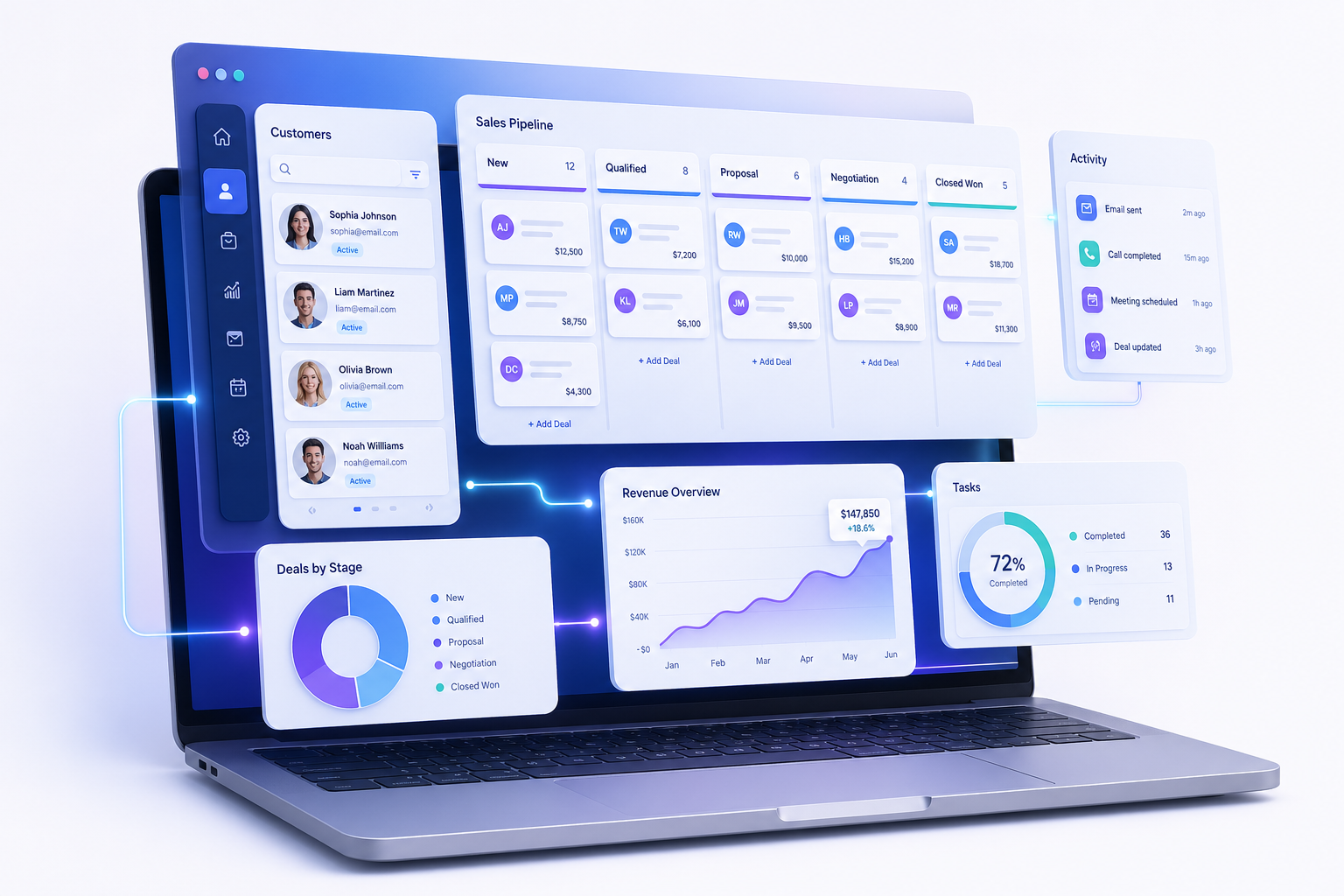
Implementing a CRM system can transform your small business, driving efficiency, and enhancing customer relationships. Let’s dive into key strategies to ensure a seamless integration of CRM software into your operations.
For small businesses, the transition to a new CRM solution must be smooth and strategic, ensuring minimal disruption. Successful implementation hinges on a well-thought-out plan and the engagement of your entire team.
Steps to Successfully Implement CRM Software
Embarking on the CRM journey requires a clear roadmap to guide you through the process. Here are the essential steps:
- Define Objectives: Identify what you aim to achieve with the CRM system, such as improving customer service or increasing sales conversion rates.
- Choose the Right Software: Select a CRM that aligns with your business goals and budget, ensuring it has the necessary features tailored to your needs.
- Data Migration: Plan and execute a data migration strategy to transfer existing customer information into the new system without data loss.
- Customize the System: Tailor the CRM to fit your business processes, including setting up workflows, templates, and reports.
- Pilot Testing: Conduct a pilot test with a small group of users to identify any issues and make necessary adjustments before a full-scale rollout.
Training Employees on New CRM Systems
Successful CRM implementation is not just about technology but also about people. Engaging training programs can empower your team to harness the full potential of the CRM:
- Interactive Workshops: Organize hands-on sessions where employees can explore the CRM features and practice real-life scenarios.
- Online Tutorials: Provide access to online resources and tutorials that employees can revisit as needed.
- Role-Specific Training: Tailor training sessions to different roles within the company, ensuring each team member understands how the CRM can benefit their specific tasks.
- Continuous Support: Establish a support system with designated CRM champions who can assist their peers with any questions or challenges.
Integrating CRM Software with Existing Tools
The true power of a CRM is realized when it seamlessly connects with other business tools. Here are some tips to integrate CRM software effectively:
“Integration is the key to maximizing the value of your CRM investment.”
Start by evaluating your current tech stack and identify which tools should sync with the CRM. Most modern CRM solutions offer APIs and plug-ins that facilitate integration with popular software like email clients, accounting systems, and marketing platforms. Ensure that data flows smoothly between systems to prevent silos and enhance collaboration across departments. Regularly monitor these integrations to troubleshoot any issues and ensure data consistency.
Case Studies of Small Businesses Using Affordable CRM Software
In the competitive arena of small business, leveraging efficient tools like affordable CRM software can be a game-changer. Let’s dive into some compelling case studies that illustrate how small businesses have reaped the benefits through strategic CRM implementation.
These real-world examples highlight the transformative power of CRM solutions, showcasing diverse challenges and the innovative strategies employed to overcome them.
Success Stories in CRM Implementation
Let’s explore some inspiring examples of small businesses that have revolutionized their operations with the help of affordable CRM software. These stories serve as a beacon for others considering a similar path, demonstrating tangible results and growth potential.
| Business | Problem | CRM Solution Implemented | Outcome |
|---|---|---|---|
| Local Bakery | Struggled with tracking customer orders and preferences | Customized CRM with order tracking and customer profiling features | Improved customer satisfaction by 30%; repeat orders increased by 25% |
| IT Consultancy Firm | Difficulty managing project timelines and client communication | CRM with integrated project management tools | Enhanced efficiency, leading to a 40% increase in project completion rate |
| Online Retail Store | High cart abandonment rate | CRM with automated follow-up emails and personalized offers | Cart recovery rate improved by 20%, boosting sales significantly |
Lessons Learned and Best Practices
From these case studies, we extract invaluable lessons that can guide small businesses in their CRM journey. Consistent themes emerge, such as the importance of customizing CRM features to meet specific business needs and the power of automation in enhancing customer interaction.
“The key to successful CRM implementation is not just choosing the right software, but also aligning it with your business processes and goals.”
Furthermore, ongoing training and support for staff are critical to maximizing the benefits of CRM tools. By fostering a culture of adaptability and innovation, businesses can fully leverage CRM functionalities to drive growth and customer satisfaction.
Future Trends in CRM Software for Small Businesses
The world of CRM software is continuously evolving, offering new possibilities for small businesses eager to enhance customer relationships and streamline operations. These innovative trends are set to redefine the way small businesses interact with their clientele.
As technology advances at an unprecedented pace, CRM systems are integrating emerging technologies to provide more effective, personalized, and efficient customer management solutions. Let’s explore the trends that are shaping the future landscape of CRM software for small businesses.
Integration of Artificial Intelligence and Machine Learning
Artificial Intelligence (AI) and Machine Learning (ML) are revolutionizing CRM systems by enabling smart insights and predictive analyses. These technologies allow small businesses to gain a deeper understanding of customer preferences and behavior, automating routine tasks, and improving decision-making processes. This means more targeted marketing efforts and optimized customer service experiences.
Increased Focus on Data Security and Privacy
With data breaches becoming more frequent, CRM software providers are prioritizing security features to protect sensitive customer information. Strong encryption, multi-factor authentication, and compliance with regulations like GDPR are becoming standard. This focus ensures that small businesses can maintain customer trust while meeting stringent security demands.
Enhanced Mobile CRM Capabilities
As more small businesses operate on-the-go, mobile CRM solutions are gaining traction. These mobile-friendly interfaces allow business owners and their teams to access customer data, manage leads, and communicate efficiently regardless of their location. The flexibility offered by mobile CRM is crucial for small businesses looking to stay competitive in a fast-paced market.
Seamless Integration with Other Business Tools
Modern CRM systems are increasingly designed to integrate smoothly with other business applications such as email marketing platforms, social media tools, and accounting software. This interoperability ensures that small businesses can create a cohesive ecosystem that supports all facets of their operations, leading to increased productivity and reduced operational silos.
Personalization and Customization at Scale
Small businesses are leveraging CRM systems to offer personalized experiences to their customers. Future CRM solutions will further enhance this by providing more customization options, enabling businesses to tailor the software to their specific needs and customer segments. Personalization is not just a trend; it’s a necessity for building long-lasting customer relationships.
In conclusion, these trends signify a bright and promising future for CRM software tailored for small businesses. As these technologies evolve, they will undoubtedly provide more powerful, cost-effective solutions that empower small businesses to thrive in an ever-competitive landscape.
Final Summary
In today’s competitive market, affordable CRM software is not just a tool but a strategic ally for small businesses. As we look to the future, embracing these technologies will not only streamline operations but also unlock new opportunities for growth. So why wait? Dive into the world of CRM and watch your small business flourish.